



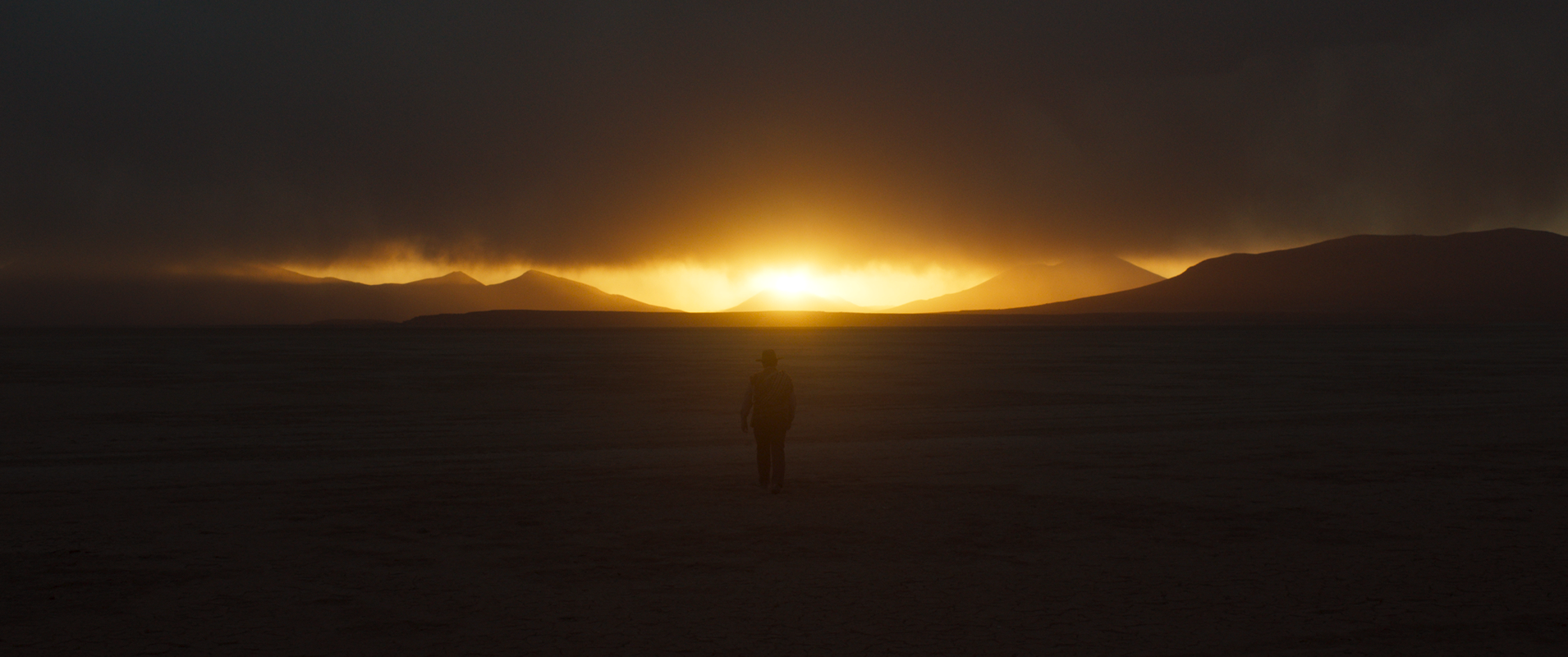
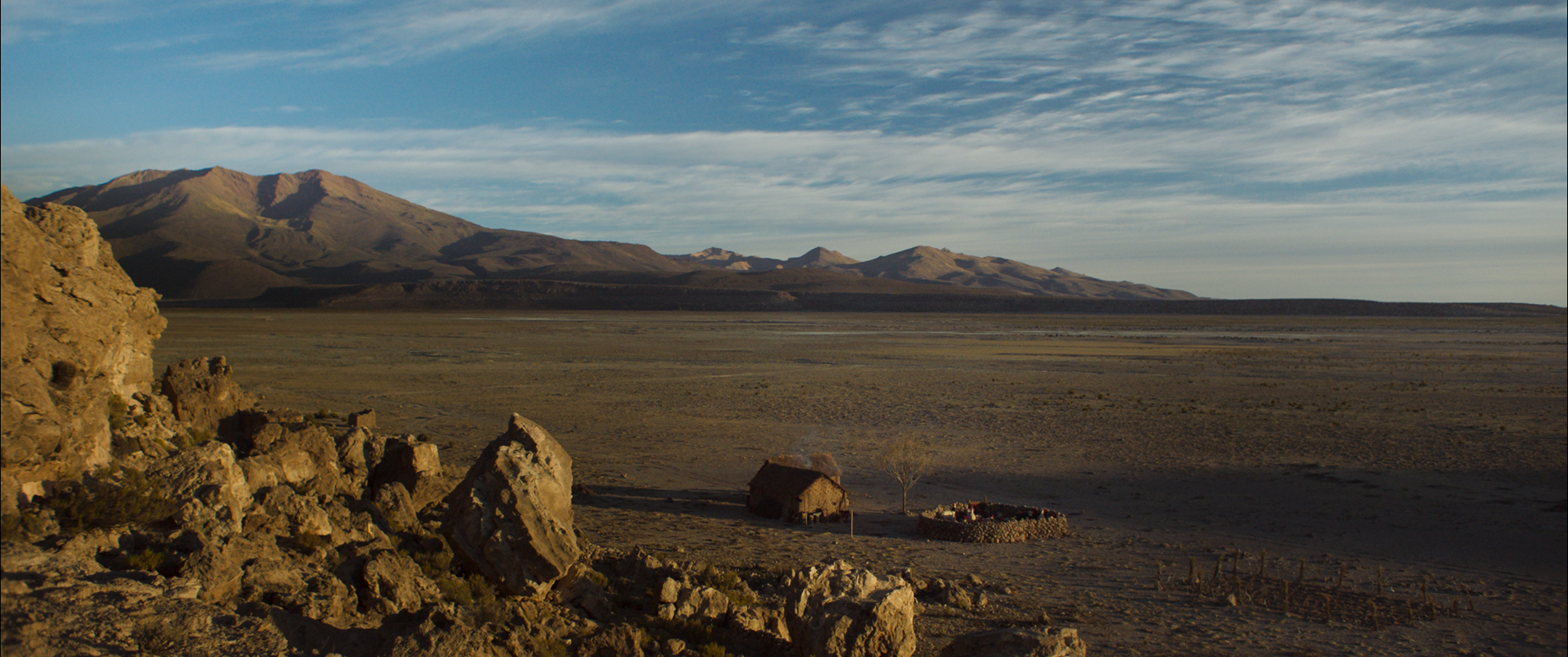
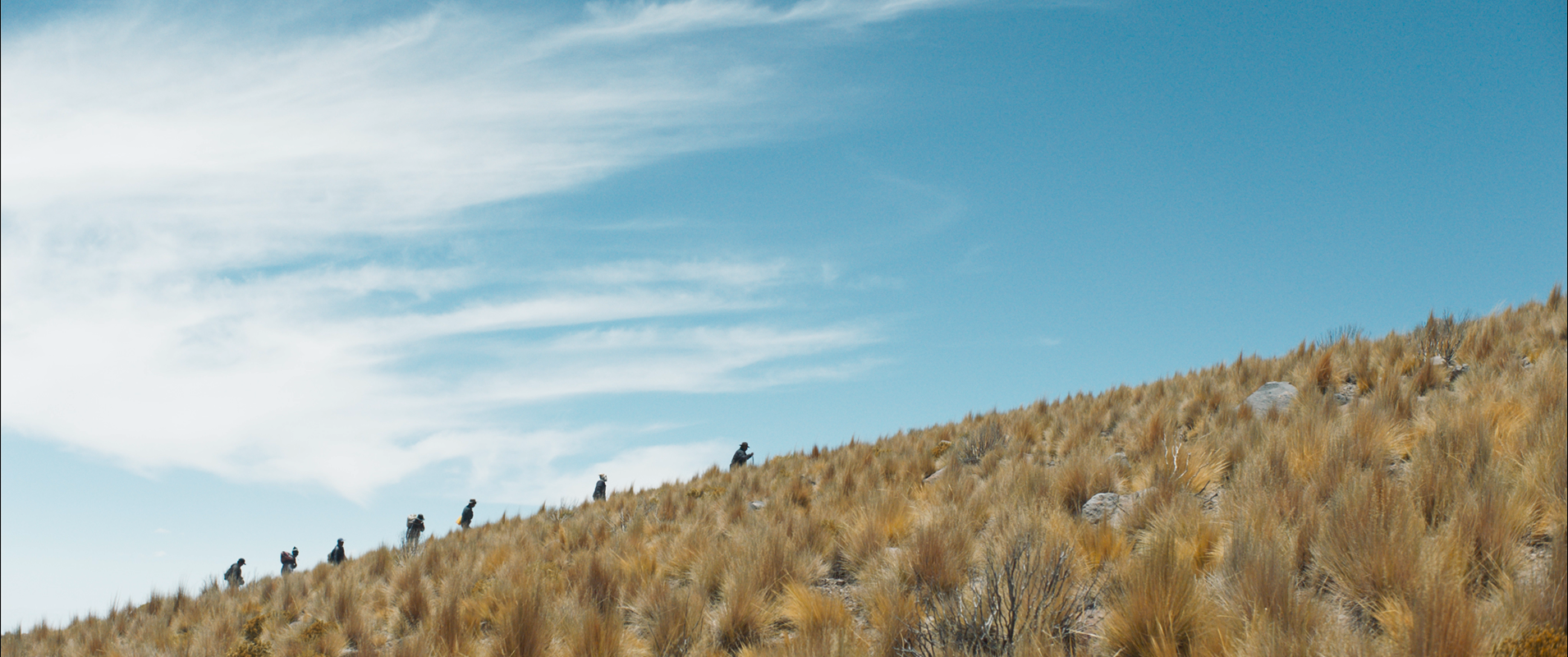
Utama opens with the breathtakingly beautiful image of an older man walking toward the sun as it rises golden above the mountains. This is Virginio, whose weathered face is as cracked as the earth beneath his feet. Virginio spends his days roaming the parched highlands of the Bolivian Andes, letting his herd of fluffy llamas graze. He and his wife, Sisa, live without running water or electricity. They are a real-life couple—non-professional actors discovered by director Grisi while he was driving around looking for filming locations.
It’s Sisa’s job to fetch water, while Virginio lets the llamas graze. The problem, however, is that it no longer rains in the region, and snow is no longer visible on the mountain peaks. The village spring has now dried up. “Time has grown weary,” a friend tells Virginio to explain the drought. But the truth is that climate change is making life unbearable—not that global warming is ever discussed.
Until the couple’s grandson, Clever, arrives from La Paz. Clever wants his grandparents to move to the city with the rest of the family. What he doesn’t understand is that for Virginio and Sisa, the question isn’t where to live, but where to die. If they leave, eventually there will be no one left in the family to speak the indigenous Quechua language or live their way of life.
“Utama” has been described as a cross between a minimalist Sergio Leone western and Sebastião Salgado’s desolate photographs. It is a film that uses dazzling imagery to show the devastating impact of climate change on traditional indigenous peoples.
- direction
- Alejandro Loayza Grisi
- cast
- José Calcina, Luisa Quispe, Santos Choque
- duration
- 87 min
- year
- 2022
- country
- Bolivië
- language
- Quechua, Spanish
- Subtitles
- Dutch, French
Een oogverblindend mooie film met een onheilspellende boodschap.